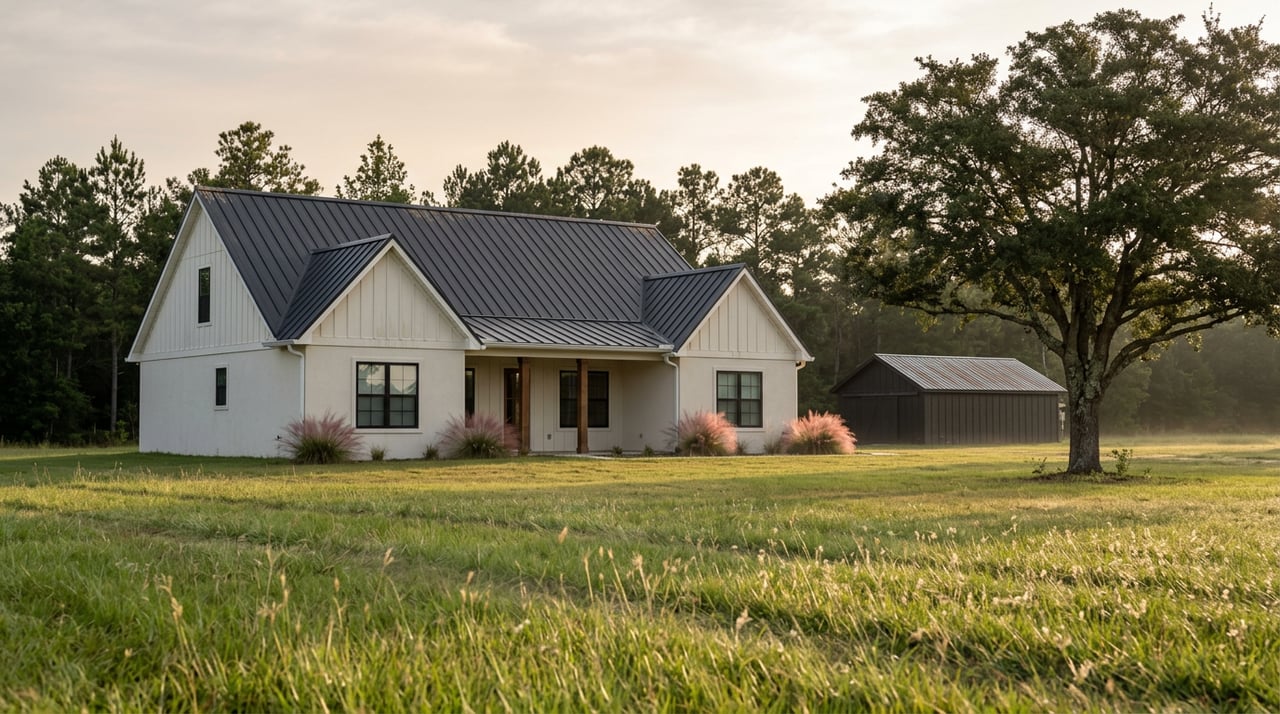
What exactly did you buy when you closed on that ten-acre tract outside Arp? Most buyers answer without hesitation: the house, the pasture, the tree line, the pond if there is one. Fewer stop to ask about what's underneath all of it. In most of the country that question barely matters. In Smith County, it can matter quite a bit, and the reason goes back almost a hundred years.
Arp sits inside the footprint of the old East Texas Oil Field, one of the largest oil discoveries in American history. That history didn't stay in the past. It shows up today in deed records, in title exceptions, and in a category of ownership most buyers never learn about until it's already sitting in their file: the severed mineral estate.
A Field That Never Fully Left
In October 1930, a wildcatter named Columbus Marion Joiner brought in a well called Daisy Bradford No. 3 on a farm near the Rusk County line. The well hit oil at roughly 3,536 feet, and within a few years the discovery had grown into a field stretching across Gregg, western Rusk, southern Upshur, southeastern Smith, and northeastern Cherokee counties, according to the East Texas Oil Field's entry in the Handbook of Texas. At its peak, downtown Kilgore alone held more than a thousand active wells packed into a few blocks, making it the densest oil development anywhere in the world at the time. The primary producing layer across the field was the Woodbine Formation, a Cretaceous-age sand that had been known to geologists since the early 1900s but hadn't been reached successfully until Joiner's third try.
That boom is a century old now, but the county underneath Arp never stopped producing. As of May 2026, Smith County reported roughly 96,700 barrels of oil and 1.4 million MCF of natural gas in a single month, with 723 active wells and 49 operators still working leases across the county. This isn't a dormant field being remembered fondly at a museum. It's a working one, quietly generating royalty checks and lease renewals on land that, from the road, looks like nothing but pasture and pine.
The Deed Under the Deed
Here's where it becomes relevant to anyone buying acreage rather than just anyone drilling for oil. During decades of leasing, many landowners sold their surface but kept their minerals, or sold their minerals separately from their surface. The Texas Supreme Court recognizes that an owner may split what's called the mineral estate from the surface estate entirely. Once that split happens, it runs with the land. It doesn't heal itself the next time the property changes hands.
Deeds.com describes a general mineral deed in Texas as transferring all oil, gas, and mineral rights outright, no exceptions or reservations attached. A reservation clause does something similar in effect but in reverse: the seller keeps the minerals while handing over the surface. Either way, the buyer who signs the closing papers years or decades later may own the dirt, the fences, and the house, while someone else entirely, maybe a family they've never met, holds the rights to what's underneath.
What a Standard Closing Won't Tell You
Most buyers assume their title policy protects them from surprises like this. It's easy to skim past the policy when you're focused on the survey, the septic report, and the closing disclosure.
The actual record of who owns what lives at the Smith County Clerk's office at 200 E. Ferguson, Suite 300, in Tyler. That office maintains the deeds, mineral conveyances, leases, and releases that make up the chain of title for every parcel in the county, including the ones around Arp. A title company or real estate attorney can trace that chain back through the grantor-grantee index to find out whether the mineral estate was ever severed, and if so, when and by whom.
Before you close on acreage here, it's worth asking three specific questions rather than assuming the answer is fine:
- Has the mineral estate on this property ever been severed, and if so, is there an active lease on file?
- Does my title commitment list a standard mineral exception, and has anyone actually traced the chain of title to confirm current ownership?
- If minerals are severed, does the existing lease or deed include any surface use limitations, or could a mineral owner still access the land for extraction?
None of these questions require a law degree to ask. They do require asking before the option period closes, not after.
What Severed Minerals Change, and What They Don't
A severed mineral estate doesn't mean someone can show up tomorrow and drill in your front pasture. Texas courts have long recognized the "reasonable use" doctrine. Plenty of severed-mineral properties in and around Smith County have sat for generations without a single well pad appearing.
What it does change is control.
It also affects resale. A buyer down the line who does their homework, and more buyers do every year, will ask the same three questions above. Sellers who can hand over a clean answer, ideally with documentation already pulled, tend to move through negotiations with fewer stalls.
A Few Questions Worth Settling Early
Does a severed mineral estate lower my property value? Not automatically. Plenty of properties across East Texas carry a severed mineral history and sell at full market value. What matters more is whether the buyer and seller both know the facts before they negotiate, rather than discovering them at the title company on closing day.
Can I buy the minerals back if they were severed years ago? Sometimes, if the current owner is willing to sell. It requires locating them through the deed records, which is exactly the kind of research a title company or landman can do for a fee before you decide it's worth pursuing.
Does this only matter for large acreage tracts? Severance doesn't care about lot size. A one-acre parcel can carry the same history as a two-hundred-acre ranch if it was ever part of a larger tract during the original leasing decades. Acreage buyers just tend to notice it more because they're more likely to plan permanent improvements across the land.
If you're weighing a purchase near Arp, or anywhere else across Smith County's stretch of old oilfield ground, it's worth having someone who already knows where to look. Brittany Sartain works this market regularly and can help you get the right questions answered before you're past the option period, not after. Schedule a free consultation and bring the address. She'll help you find out what you're actually buying.
This article is general information, not legal, tax or financial advice. Consult a qualified professional about your situation.