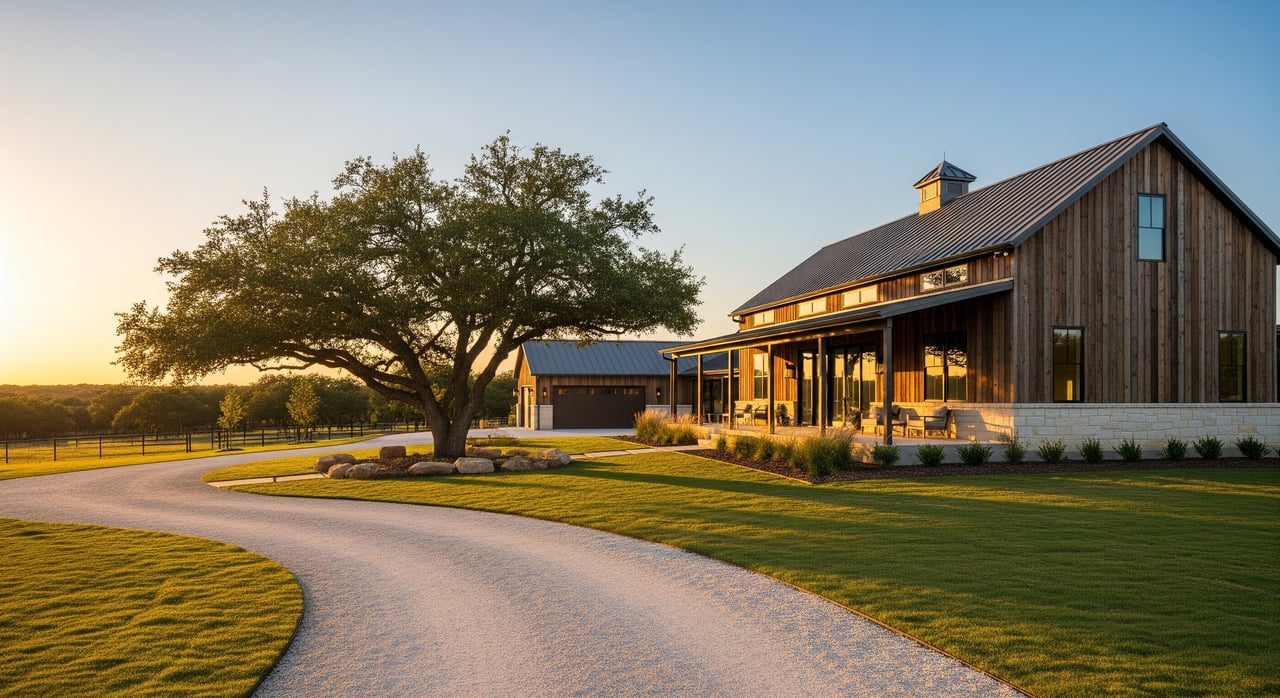
Dreaming of a barndominium near Jacksonville but not sure how to pay for it? You’re not alone. These metal or post-frame homes are popular in East Texas, yet financing can feel different from a typical house. In this guide, you’ll learn which loans fit barndominiums, local rules that can affect approval and cost, and a simple checklist to move your project forward with confidence. Let’s dive in.
What makes barndominium financing different
A barndominium is a metal or post-frame building with finished living space. Lenders often treat it as nonstandard construction, so documentation matters. You’ll likely need detailed plans, a qualified builder, permits, and an appraisal that supports marketability. Specialist lenders note these extra steps.
If your build sits on a permanent foundation and meets residential building codes, common loan programs can work. Availability and underwriting are lender specific, so plan to shop around and ask direct questions about barndominium experience. Many lenders outline these expectations.
Your main loan options
USDA loans
USDA can back single-close construction-to-permanent loans in eligible rural areas, often with up to 100% financing for owner-occupants. You must meet income limits, location rules, and use an approved lender and builder. See USDA’s program overview.
VA loans for veterans
VA allows construction and one-time-close options for primary residences that meet VA’s property standards. Not all lenders offer VA construction loans, so experience is key. VA is not for land-only purchases without immediate construction. Review VA property type guidance.
FHA programs
FHA has construction and rehab pathways, but you must follow minimum property standards, inspections, and lender participation rules. Down payments typically start at 3.5 percent for purchase programs. Check FHA program information.
Conventional construction-to-perm
Many community banks and credit unions offer one-time-close or two-close loans. Expect builder approval, draw inspections, and varied down payments, often 5 to 20 percent based on profile and LTV. Learn how conventional construction lending works.
Local and specialist lenders
In rural builds, you may find the best fit with regional lenders or Farm Credit-type institutions that understand post-frame homes and acreage. Availability is local and lender dependent. Specialist lenders explain this niche.
Lender requirements that can make or break it
- Classification: How your home is classified matters. Site-built and modular on a permanent foundation are handled differently than HUD-coded manufactured homes. See federal definitions.
- Builder approval: Most lenders require a vetted general contractor and do not allow self-builds. Expect checks on experience and insurance. Here’s what lenders verify.
- Appraisal and comps: Unique homes can lack comparable sales, which can affect value and terms. VA-related guidance flags this challenge.
- Occupancy rules: USDA, VA, and many FHA programs require owner occupancy for their main products. USDA program basics.
Local factors near Jacksonville that affect approval and cost
City vs. county rules
Inside Jacksonville city limits, you will follow city zoning, permits, inspections, and certificate of occupancy steps. Outside city limits, county land use is limited, but other rules still apply. Texas municipalities control zoning inside city limits. Review the state zoning framework. For tax rates and city contacts, use the City of Jacksonville’s official page.
Septic, wells, and utilities
Many rural tracts need an on-site sewage system and sometimes a private well. Lenders often require a soils evaluation, a permitted septic design, and proof of water availability or an approved plan. TCEQ oversees septic permitting and licensing.
Floodplain and elevation
Flood risk is parcel specific. Check FEMA’s maps for your tract. Flood zone status can drive insurance requirements and influence construction rules for federal programs. Start with FEMA’s Texas resources.
Access, ETJ, and taxes
Lenders want recorded legal access and utility feasibility. If your land is in Jacksonville’s extraterritorial jurisdiction, some city-related platting rules can apply. TAMU explains ETJ and land use basics. Ongoing carrying costs depend on city, county, and school taxes. The city posts adopted rates and contacts here.
Budgeting: costs beyond the shell
Expect a wide range for barndominium costs based on finishes and design. Industry estimates often run about 65 to 160 dollars per square foot, with shell kits on the low end and fully finished builds higher. This excludes land and site work like septic, well, driveway, and utility extensions. Build with contingencies. See a cost overview.
Insurance also matters. Many carriers insure metal or post-frame homes, but pricing reflects materials, distance to fire response, and local hazards. If your lot is in a FEMA flood zone, flood insurance is required by lenders. TWIA applies to defined coastal areas, and Cherokee County is inland, so TWIA does not apply, though wind and hail still affect premiums. Review Texas windstorm context. During construction, lenders typically require builder’s risk coverage. Lenders outline these insurance needs.
Appraisals and resale realities
Appraisals can be conservative when comparable sales are limited. That can mean tighter loan-to-value, more cash at close, or conditions to proceed. VA-oriented guidance highlights these appraisal hurdles.
How your home is classified drives both appraisal and loan options. Confirm early whether your project is treated as site-built or HUD-coded manufactured, and ensure a permanent foundation and code compliance as required. See federal classification details.
Your step-by-step financing checklist
Pin down jurisdiction. Confirm if your tract is inside Jacksonville city limits, in the ETJ, or in unincorporated Cherokee County. Check city contacts and taxes on the city site.
Pre-screen loan fit. Verify USDA rural eligibility, VA service eligibility, or FHA/conventional construction options with lenders who handle construction-to-perm. USDA program overview and FHA program information can help you frame questions.
Select a qualified builder. Choose a general contractor with barndominium or comparable new-home experience. Lenders will vet experience and insurance. See typical builder-approval needs.
Gather plans and costs. Prepare stamped plans, an itemized budget, and a draw schedule. These drive underwriting and the appraisal. Construction lenders explain documentation.
Handle onsite systems. Order a soils evaluation and permitted septic design, and confirm water source or well plan. TCEQ oversees OSSF requirements.
Check flood risk. Pull FEMA maps and confirm any elevation and flood insurance needs. Start here.
Budget for site work. Include septic, well, driveway, utility extensions, and contingencies in your total cash plan. Cost context.
Shop lenders. Call multiple community banks, construction specialists, and rural-focused lenders to confirm they fund barndominiums and offer single-close options. Specialist lender overview.
Timeline watchouts
Construction loans take more time than standard mortgages due to builder approval, draw setup, and inspections. USDA and VA one-time-close programs also require agency and builder coordination, so plan for extra lead time. USDA outlines program processes.
Ready to map out your barndominium plan?
If you want a clear path from land search to closing, you deserve a local guide who knows East Texas rules, lenders, and timelines. Reach out to Brittany Sartain to talk through your goals and start a smart financing and build plan near Jacksonville.
FAQs
Can you get 100 percent financing for a barndominium near Jacksonville?
- USDA can offer up to 100 percent financing in eligible rural areas, and VA can offer 0 percent down for eligible veterans, but lender participation and program rules apply. USDA program basics and VA guidance.
What documents do lenders ask for on barndominium construction loans?
- Expect detailed plans, an itemized cost breakdown, a draw schedule, builder credentials and insurance, permits, and site reports for septic, water, and flood status. Typical lender requirements.
Do you need flood insurance for a barndominium near Jacksonville?
- Only if your property falls in a FEMA-designated flood zone or your lender requires it after reviewing maps and elevation. Check FEMA’s Texas resources.
Can you use FHA for an existing or new barndominium?
- FHA has rehab and construction pathways, but your home must meet minimum property standards and program rules, and your lender must offer the product. Explore FHA program information.
How do appraisers value barndominiums with few comps?
- Appraisers look for the best available comparable sales and marketability. When comps are limited, lenders may use conservative values or require more equity. See guidance on unique property types.
Is TWIA required for homes in Cherokee County?
- No. TWIA applies to defined coastal counties. Cherokee County is inland, though private insurers still price wind and hail risk in premiums. Texas windstorm context.